

The demand for Odoo ERP professionals is rising rapidly as businesses continue to adopt digital solutions for managing operations. Many companies today prefer flexible, customizable, and cost-effective ERP systems — and Odoo stands at the top of this list. This growing adoption has opened doors for professionals from all backgrounds, including those without prior technical experience.
If you’re someone from a non-technical field wondering whether you can build a successful career in Odoo, the answer is an absolute yes. With the right learning roadmap, structured training, and commitment, transitioning into the Odoo ecosystem is not only possible but highly rewarding.
In this blog, we will guide you step-by-step on how to switch from a non-technical background to an Odoo ERP career, the skills required, job roles available, and how courses like Best Python & Odoo Training or a Python & Odoo Course can accelerate your learning journey.
Many people assume ERP careers require deep technical expertise. However, Odoo is unique its modular structure, easy-to-understand workflows, and user-friendly interface make it accessible even for beginners.
Odoo provides clear workflows, intuitive menus, and simplified business processes. Even non-tech professionals can understand modules like Sales, CRM, HR, Accounting, and Inventory with basic practice.
Companies across industries — manufacturing, retail, education, healthcare, trading, logistics, and more — are shifting to Odoo. This creates consistent demand for consultants, analysts, implementers, testers, and developers.
You don’t have to be a programmer on day one. You can start in functional roles and gradually move to technical roles if interested.
Odoo ecosystem is expanding globally. Skilled professionals often grow into roles like Project Manager, ERP Consultant, Technical Lead, or Solution Architect.
Switching to Odoo does not mean you must start with coding. There are roles designed for people from business, finance, operations, HR, marketing, or administrative backgrounds.
Best for: Business, management, finance, BBA, MBA, operations, and administration backgrounds.
Responsibilities:
Best for: Customer service, administration, operations backgrounds.
Responsibilities:
Best for: Those who understand workflows, processes, and business operations.
Responsibilities:
Best for: Analytical thinkers and detail-oriented professionals.
Responsibilities:
Best for: People willing to learn technical skills like Python.
Responsibilities:
If you plan to move into the technical side, completing a Best Python & Odoo Training program is a strong foundation.
A non-technical candidate can become job-ready by mastering a combination of functional and basic technical concepts.
Start by learning high-demand modules:
Understanding workflows such as quotations, invoices, stock transfers, and employee management will help you perform well in interviews.
Companies prefer professionals who understand:
Functional consultants must talk to clients, understand needs, and communicate solutions effectively.
Even if you don’t become a developer immediately, knowing some basics will help:
Joining a structured Python & Odoo Course can help you gain these skills gradually.
Transitioning into Odoo can be simple when you follow a clear, structured plan.
Spend time learning what Odoo does and how companies use it. Watch module demos and go through community forums.
If you are comfortable with business workflows, start as a functional consultant.
If you aim to become a developer later, begin with learning Python.
A professional training centre offering:
…will give you guided learning, hands-on practice, and real-world project exposure.
Install Odoo on your system or use online trial versions to learn:
Create simple projects like:
Project experience is valuable during interviews.
Most Odoo interviews check:
With practice, even beginners can perform well.
While self-learning is possible, structured training accelerates your progress by providing:
A professional Best Python & Odoo Training program bridges the gap between non-technical and technical learning, making you job-ready in months.
Switching from a non-technical background to an Odoo ERP career is not only achievable but highly promising. With continuous learning, the right guidance, and a structured training pathway, you can grow into roles like Functional Consultant, Odoo Implementer, Support Engineer, or even Developer.
Odoo is a fast-growing ecosystem — and this is the perfect time to enter.
If you’re preparing for a career shift, enrolling in a Python & Odoo Course can be the first step to unlocking your future in ERP.
 Skills Required to Become a Job-Ready Python Full Stack Developer
22 December 2025
Skills Required to Become a Job-Ready Python Full Stack Developer
22 December 2025
 How to Switch from a Non-Technical Background to an Odoo ERP Career
28 November 2025
How to Switch from a Non-Technical Background to an Odoo ERP Career
28 November 2025
 What are the Skills Required for a Python and Odoo Developer
07 October 2025
What are the Skills Required for a Python and Odoo Developer
07 October 2025
.png) Career Opportunities in Cloud ERP and Learning Odoo for Freshers
08 September 2025
Career Opportunities in Cloud ERP and Learning Odoo for Freshers
08 September 2025
 Learn Odoo Python | The Future of ERP Development
02 April 2025
Learn Odoo Python | The Future of ERP Development
02 April 2025
.png) Become a Certified Software Tester | Learn Online with Akira Knowledge Hub
07 April 2025
Become a Certified Software Tester | Learn Online with Akira Knowledge Hub
07 April 2025
 AI and Machine Learning Automation for Data Professionals
17 February 2025
AI and Machine Learning Automation for Data Professionals
17 February 2025
 python odoo erp training
10 December 2024
python odoo erp training
10 December 2024
 A Beginner's Guide to AI & Machine Learning with Python
16 January 2025
A Beginner's Guide to AI & Machine Learning with Python
16 January 2025
 Top 5 Benefits of Learning Python for Odoo Development
22 January 2025
Top 5 Benefits of Learning Python for Odoo Development
22 January 2025
 Top Python Libraries for Machine Learning in 2025
04 February 2025
Top Python Libraries for Machine Learning in 2025
04 February 2025
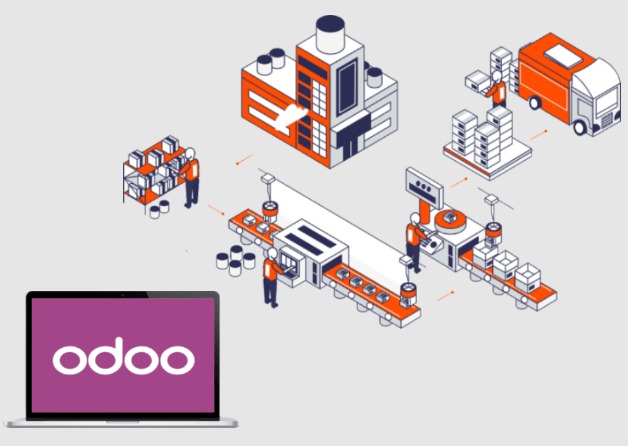 Introduction to Odoo
11 December 2024
Introduction to Odoo
11 December 2024



Copyright © 2025-26 Akira Knowledge Hub All rights reserved. | Privacy Policy